The Claude Code Source Code Leak: What We Learned From Anthropic’s Security Fiasco

Yesterday brought a new level of irony to the AI industry. The Claude Code source code leak hit the internet, giving everyone a front-row seat to the inner workings of Anthropic’s closed, safety-first approach—by exposing its prized code for all to see. Not only did the leak spread rapidly, it made Anthropic, for a brief moment, more open than even OpenAI.
How did this happen, what did the leak actually show, and what does it mean for the future of AI development and security?
How the Claude Code Source Code Leak Happened
The whole fiasco started just past 4:00 a.m. when version 2.1.88 of the Claude Code npm package shipped with a 57MB source map file. Source maps are meant for debugging—they let developers map minified JS or TS code back to the readable stuff. In production, these should never ship. But this one included the full, readable TypeScript source code of Claude Code, clocking in at over 500,000 lines.
Security researcher Chiao Fan Sha spotted the error within minutes. Despite Anthropic’s legal team scrambling with DMCA takedowns, the code had already proliferated. Mirrors popped up across the web. Fireship and others cloned it, GitHub stars soared past 50,000, and alternate versions (like Claw Code and openclaw) emerged almost instantly.
What Went Wrong With the Release?
It’s not normal for build tools to include source maps in production. Usually, the build pipeline strips them before publishing npm releases. But Claude Code relies on Bun.js—the JavaScript runtime Anthropic recently acquired. About three weeks before the leak, a GitHub issue reported Bun.js serving source maps in production. Maybe this was the culprit, or maybe a developer accidentally missed a build config, or perhaps someone did it on purpose. The exact reason remains murky, but the impact is crystal clear: even billion-dollar AI startups have brittle release processes.
External reference: For a technical breakdown on source maps and why they shouldn’t be publicly exposed, see MDN’s source map documentation.
Secrets Exposed: What’s Actually in the Leaked Anthropic Code?
So, what did people find once they started combing through Claude Code’s guts?
Anthropic’s Anti-Distillation and Poison Pills
Anthropic has always worried about model outputs being used to train competitors. Their solution: anti-distillation poison pills. The code fabricates references to non-existent tools in certain contexts, polluting outputs so that anyone attempting to train a knockoff model on Claude’s output ends up with garbage data. This means, for instance, if someone tried to scrape Claude’s outputs to train a rival LLM, their model might start talking about features or APIs that never existed. Subtle, clever, maybe a little petty—but now that these tricks are public, every competitor knows exactly what to filter out.
Undercover Mode and Its Implications
The codebase includes an “undercover mode” feature, which removes self-references from commit messages and outputs. Ostensibly, this helps keep model codenames and internal details secret. Some speculate it could be used to sneak Claude into open source projects and pass its output as human—sidestepping bias, scrutiny, or audits. That’s not a conspiracy theory, just a real possibility now being discussed by those who reviewed the leak.
Regular Expression-based Frustration Detector
One part of Claude Code’s logic is classic in its simplicity. A regex-based frustration detector scans user prompts for certain keywords, like “balls”—yes, really—and logs an event if they appear. This is how a state-of-the-art AI model attempts to figure out if you’re having a lousy coding experience. Fifty years of natural language processing, and in the end, it’s just regular expressions and logging. Sometimes low-tech works.
The Bash Tool: Parsing and Executing User Commands
One of the most substantial components in Claude Code is the bash tool integration. This module, with over 1,000 lines of TypeScript, helps the model reliably parse, validate, and execute bash commands requested by the user. For an AI coding assistant, this feature is essential and potentially risky. Overexposing this logic could illuminate vulnerabilities, especially if the bash commands aren’t properly sandboxed.
Example: Command Execution Helper
// Simplified example of bash execution logic
type BashCommand = string;

function sanitizeCommand(cmd: BashCommand): boolean {
  // Only allow alphanumerics, dashes, underscores, no pipes
  return /^[a-zA-Z0-9_\- ]+$/.test(cmd);
}

function runBashCommand(cmd: BashCommand) {
  if (!sanitizeCommand(cmd)) {
    throw new Error('Potentially unsafe command');
  }
  // Placeholder — actual spawning is more complex
deno.run({ cmd: ["bash", "-c", cmd] });
}
This is obviously oversimplified, but it drives home how delicate prompt-to-command pipelines are in production AI systems.

Development Practices Revealed: More Comments Than Code
One oddity in the leaked repository: the quantity of inline comments. Many files have more comments than actual code. These aren’t for harried human maintainers. Instead, most are prompts and explanations provided for the benefit of the model itself—either to better explain the logic, increase transparency for the LLM, or perhaps to bootstrap recursive improvements. This is a new kind of programming, somewhere between software engineering and prompt engineering.
Additionally, the entire flow from user input to AI response is finely orchestrated. Instead of a simple system prompt plus user prompt arrangement like you see in basic chatbots, Claude Code stitches together 11 distinct steps, with guardrails, context layers, and pre-parse logic. AI tool orchestration is getting complicated, but it’s still mostly familiar code behind the curtain.
Feature Flags and Roadmap Reveals
The Claude Code leak didn’t just expose implementation details. Hidden within were roadmap documents, experimental flags, and features Anthropic hadn’t announced publicly:
- Buddy: A Tamagotchi-style digital companion for developers to customize and "raise." Could be a joke, could be a prototype.
- Opus 4.7 & Capiara: References to what appear to be new models or internal codenames.
- Ultra Plan, Coordinator Mode, Demon Mode: Unreleased features with unclear purposes, but with suggestive names.
- Chyus: Named for the Greek concept of fate or the divine moment. Seems to be an autonomous background agent keeping a daily journal and consolidating its own memories during “dream mode.”
If these features reach production, they may foreshadow the direction of competitive AI development for the next year—unless, of course, Anthropic kills them for security reasons.

Lessons for AI Security and the Open Source Community
The greatest lesson from the Claude Code source code leak might be the most boring one: releasing open source npm packages with misconfigured build scripts is still the quickest way to leak your company’s crown jewels.
Bun.js (the JS runtime at the center of this mistake) was already flagged for leaking source maps in production. When this risk intersects with thousands of lines of hardcoded guardrails, poison pills, and experimental flags, the stakes are high.
Every AI developer or startup should re-examine package publishing workflows. Are your source maps scrubbed? Are experimental feature flags flying in plain sight inside production builds? Would your roadmap survive daylight if someone accidentally rushed a publish?
And for those who expect advanced AI magic behind every prompt, seeing that so much of Claude Code boils down to glue code, detours, and TypeScript helpers is humbling. Most of the “AI” here is centuries-old programming wisdom, forced into the modern architecture of prompt orchestration and LLM feedback loops. Don’t underestimate a well-placed regex or a wall of comments—sometimes that’s where the real engineering happens.
What’s Next After the Claude Code Leak?
Anthropic’s security mishap will undoubtedly shape its public image as it moves toward a potential IPO. For the developer community, the leak serves as both a cautionary tale and a fascinating look under the hood of a leading AI product. Whether competitors will benefit more from the leaked code than Anthropic suffers is unclear. What’s certain is this: any company putting the words “AI safety” on slides or investor decks absolutely cannot afford to treat basic build hygiene as an afterthought.
Get CodeTips in your inbox
Free subscription for coding tutorials, best practices, and updates.
More from CodeTips
The Best AI Code Generator Won't Save You If You Use It Like This
Most developers are using AI to write code now. But there is a massive gap between engineers who strategically guide an AI Code Generator and "vibe coders" who just hit enter and hope for the best. One group ships features faster. The other ships bugs to production on a Friday afternoon.
Should You Learn to Code With AI? The Honest Truth
Should you learn to code with AI doing the heavy lifting? One old story proves why skipping the basics is a trap, and what it costs you when AI gets it wrong.

How to Run AI Models Locally: Complete Setup Guide
Learn how to run AI models locally on your own hardware, skip cloud subscriptions, and build a full local AI coding setup with LM Studio, Ollama, and VS Code.
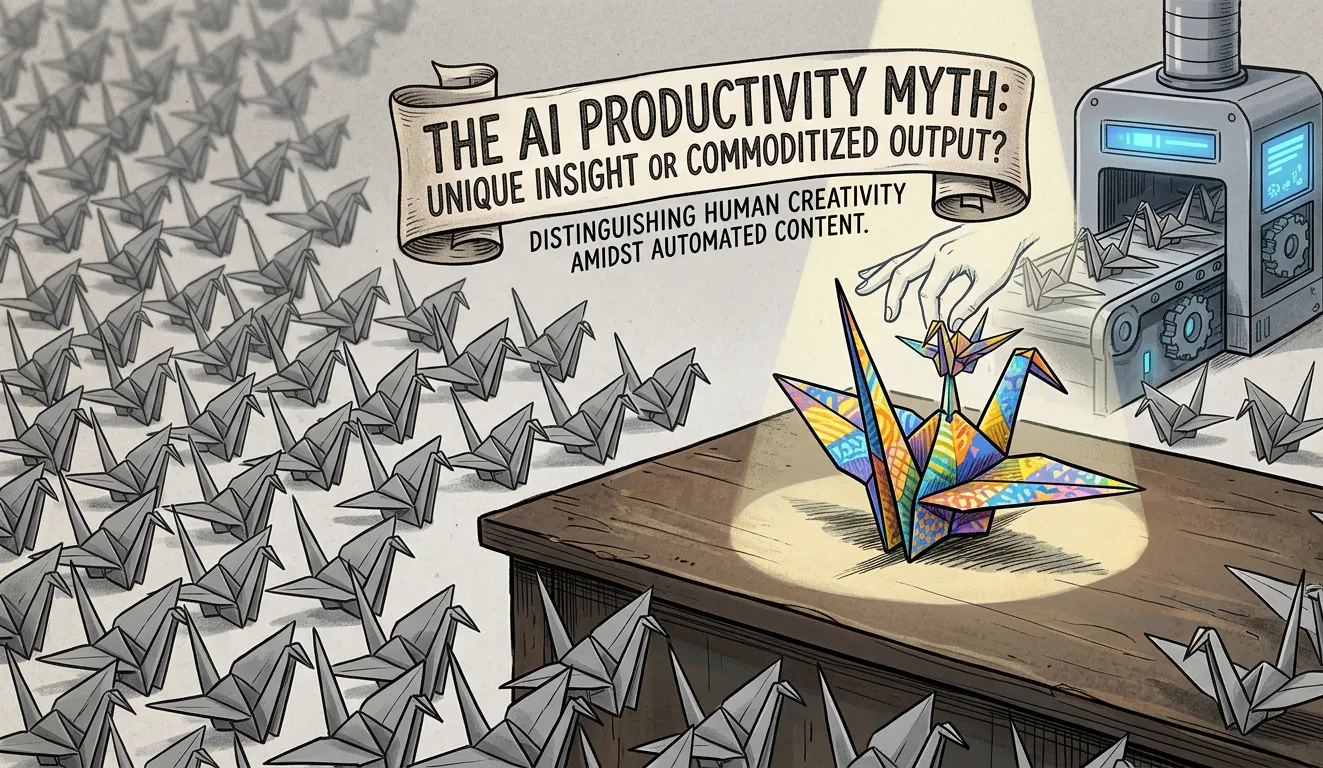
The AI Productivity Myth: Why Most People Get It Wrong
AI productivity tools promise efficiency, but relying on the same workflows as everyone else leads to generic output. Here's how to use AI to amplify what makes you rare.

Prompt Driven Development: What Is SPDD?
Learn about prompt driven development and structured prompt-driven development (SPDD), how it transforms software engineering, and why it matters for AI.

GitHub Copilot Pricing Changes: What You Need to Know
GitHub Copilot pricing changes are here, and they're not pretty. Learn how the shift to usage-based billing affects your plan, credits, and overall value.
Claude Design: What It Is and What You Can Build
Claude Design by Anthropic lets you create polished visuals, slides, and prototypes through conversation. Here's how it works and what it's actually good for.