Most people asking this question have already started using AI tools to generate code for them, and things are going fine. That's exactly the problem.
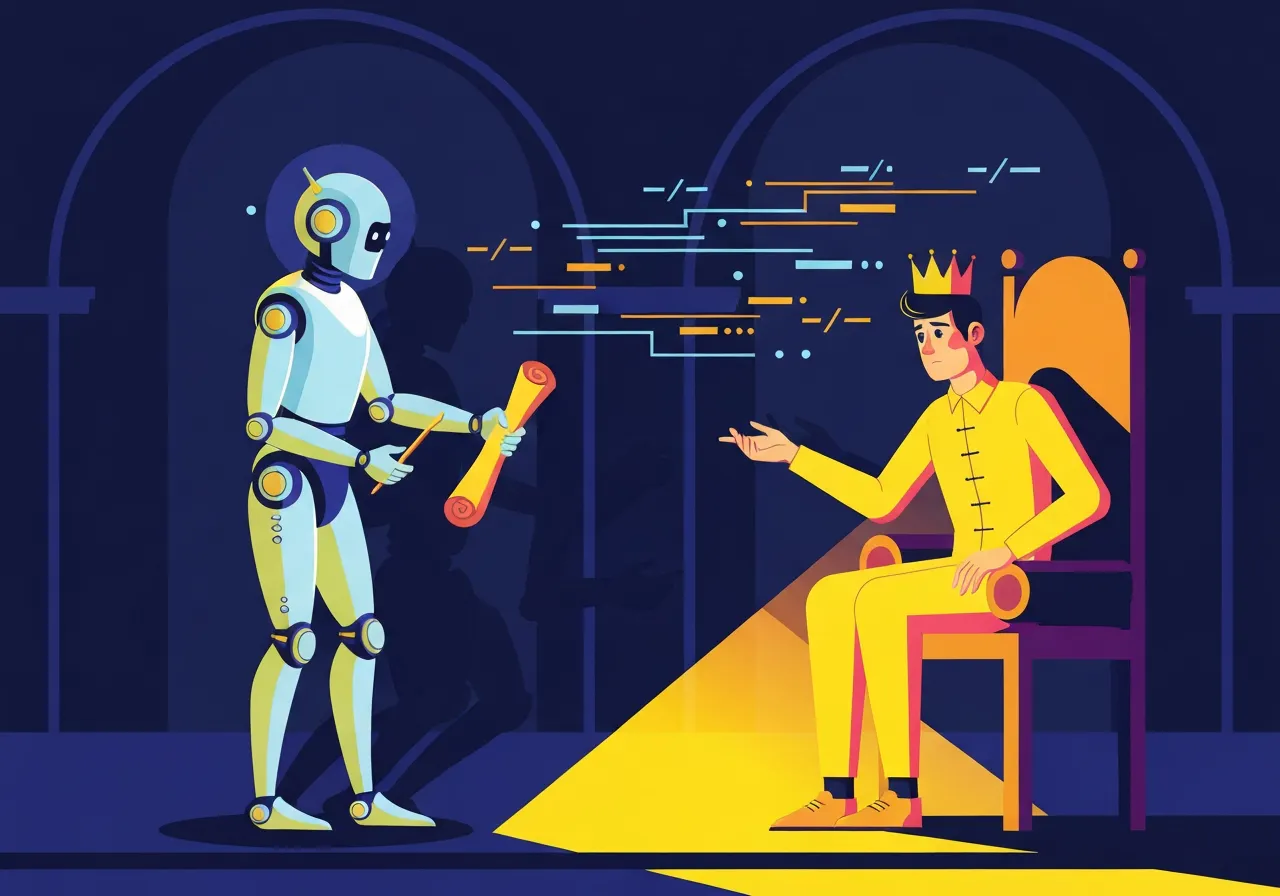
There's a story that maps onto our current moment in programming with uncomfortable accuracy, and it starts about 5,600 years ago with a prince who decided that reading and writing were someone else's job.
The Prince Who Outsourced His Literacy
The prince was smart. He had money, and literacy was hard. So he hired someone to follow him around and handle all of his reading and writing. Letters, signs, documents — all of it. And for a while, it genuinely worked.
The minor inconveniences were easy to dismiss. Sometimes the hired reader got sick and the prince had to muddle through a day without help. When the reader asked for a raise, the prince paid it without blinking. These felt like small costs for a big convenience.
But errors were compounding quietly. The hired writer would occasionally mix up dates in letters, writing the 14th instead of the 13th. The prince would show up to meetings a day late and have no idea why people were annoyed. He couldn't read the letter to check it. He had no way to catch the mistake.
Then something worse started happening. The hired writer realized the prince was completely dependent on him, and he began making small changes to letters and policies. Nothing dramatic at first. Just slight edits that shifted outcomes in his favor. The prince had no way to see it. The manipulation continued for years, quietly eroding the prince's position, until eventually the prince lost everything. No power, no money, and no ability to read or write.
He couldn't hire the reader anymore. And he had nothing left.
Why This Maps So Cleanly onto AI-Generated Code
The analogy is direct enough that it doesn't need much stretching. The prince is you. The hired reader-writer is ChatGPT, GitHub Copilot, Claude, or whatever AI tool you're using. And the dynamic plays out the same way.
At first, you can do more with less effort. You don't need to write any code. You don't need to read any code. You just describe what you want and the AI code generation handles the rest. That feels like progress.
But the problems are already starting to accumulate in the codebase, and you won't see them.
The clearest example is security. How AI coding mistakes cause security holes isn't always obvious in the moment because the generated code often looks reasonable. It runs. It passes your tests. But if there's a vulnerability baked into those scripts, you won't find out until someone exploits it. That's not a hypothetical. AI tools trained on public code repositories have been shown to reproduce insecure patterns from that training data. A 2022 study from Stanford found that developers using AI code assistants were more likely to introduce security vulnerabilities than those writing code manually, partly because of blind trust in AI output.
And security holes are just the most dramatic version. The subtler version is error compounding. One flawed function gets built on top of by another AI-generated function, which gets called by a third. By the time something breaks visibly, the root cause is buried three layers down in code you never read and wouldn't know how to trace even if you tried.
The Ceiling You'll Hit Faster Than You Expect
There's a real developer skill ceiling that comes from letting AI write all your code. It's lower than most people expect, and it shows up the moment something goes wrong.
The dangers of letting AI write all your code aren't about quality on the surface. The output can look clean. It can even be well-structured. The problem is that understanding code you didn't write requires the same skills as writing it yourself. Reading code fluently, spotting where logic is off, knowing which error message points to which kind of bug, being able to step through a function mentally and predict what it returns — these are the same muscles. You can't have one without the other.
If you can't read code, you also can't judge code readability. You can't tell whether the AI gave you something maintainable or something that will be a nightmare to modify in three months. And when the AI gets stuck in a loop producing broken variations of the same broken solution, you have no way to intervene. You're waiting for the tool to fix itself, with no fallback.
This is where vibe coding risks become real. Vibe coding — generating code from rough descriptions without deeply understanding what comes back — works until it doesn't. The failure mode isn't gradual. It's sudden, and it happens at the worst possible time: when a production bug needs a fix in the next two hours.
So, Should You Learn to Code If AI Can Do It?
Yes. And the reason isn't nostalgic or contrarian. It's practical.
Core programming fundamentals in the current AI environment aren't about typing out every line by hand. It's about being able to supervise what the AI produces. Catch the errors before they compound. Understand what a piece of code actually does before you ship it. Spot the syntax mistake buried in a 200-line output. Those skills are what separate someone who uses AI as a force multiplier from someone who is completely dependent on it.
Can you become a developer without learning to code? Technically you can build things. But you can't become a developer in any meaningful sense. A developer who can't read code is in the same position as the prince who couldn't read his own letters. Things go well until they go very wrong.
There's also an AI dependency risk that rarely gets discussed honestly. OpenAI, Anthropic, the companies behind these tools, they set the prices. GitHub Copilot has already changed its pricing tiers. That's not a criticism of any specific company; it's just the nature of commercial software. If you have built your entire practice around a paid AI tool and that tool doubles in price or changes its API terms, you either pay whatever they ask or you stop being able to do what you've been doing. That's an uncomfortable position if you have no underlying skills to fall back on.
Learning to code means you're never fully exposed to that AI pricing lock-in. You can use AI when it's available and affordable, and you can work without it when it isn't.
The Actual Balance Worth Aiming For
None of this means avoiding AI tools. GitHub Copilot genuinely cuts down time on boilerplate. ChatGPT is useful for explaining unfamiliar patterns in a codebase you've just inherited. Claude can help you think through architecture decisions. These tools are useful.
The goal is to be the person who uses them, not the person who is used by them. That means understanding enough about syntax, debugging patterns, and how code is structured that when the AI produces something broken or subtly wrong, you catch it. You can step in, fix the specific line, and move forward. Why programmers still need to read code is the same reason editors still need to understand grammar even when spell-check exists. The tool helps; it doesn't replace judgment.
The floor you need to reach isn't "could get hired as a senior engineer without AI." It's "can read a 50-line function and tell me what it does and whether it looks right." That bar is reachable, and it's the difference between a career with staying power and one that's only as stable as the last API subscription.
Frequently Asked Questions
Should you learn to code if AI can do it for you?
Yes, genuinely. Not because AI will disappear, but because AI makes mistakes and you need to be able to catch them. The more you rely on AI without understanding the output, the more those small mistakes pile up into large problems. Building something solid on top of code you don't understand is like building on sand.
Can you become a developer without learning to code?
You can build things. You can ship projects. But your ceiling will be low and your vulnerabilities will be real. The moment something breaks in a way the AI can't diagnose, or a security issue surfaces that you can't trace, you have no options. That's a genuinely fragile place to be in a professional context.
What are the real dangers of letting AI write all your code?
The two big ones are security and compounding errors. An AI might generate a script with an authentication flaw that runs fine on the surface. That flaw gets built on for months. When it's exploited, tracing it back is painful, and fixing it is even harder if you don't understand what the code was doing in the first place.
How much do you actually need to learn?
Enough to read and roughly understand what a function does. Enough to know where to look when something breaks. Enough to spot a logic error in 30 lines of output. You don't need to be able to write everything from scratch, but you need the reading skills, the debugging instincts, and a working mental model of how code executes. That's a realistic target, not an overwhelming one.
What about AI pricing changes?
This is an underrated risk. If you build your entire workflow around a single paid AI tool and that tool raises its prices or changes access terms, you have very little leverage. Developers who understand how to write code have options. They can drop down to free tiers, use smaller open-source models, or just write things by hand when the tool isn't worth the cost. That flexibility is worth a lot.
Get CodeTips in your inbox
Free subscription for coding tutorials, best practices, and updates.
More from CodeTips
The Best AI Code Generator Won't Save You If You Use It Like This
Most developers are using AI to write code now. But there is a massive gap between engineers who strategically guide an AI Code Generator and "vibe coders" who just hit enter and hope for the best. One group ships features faster. The other ships bugs to production on a Friday afternoon.

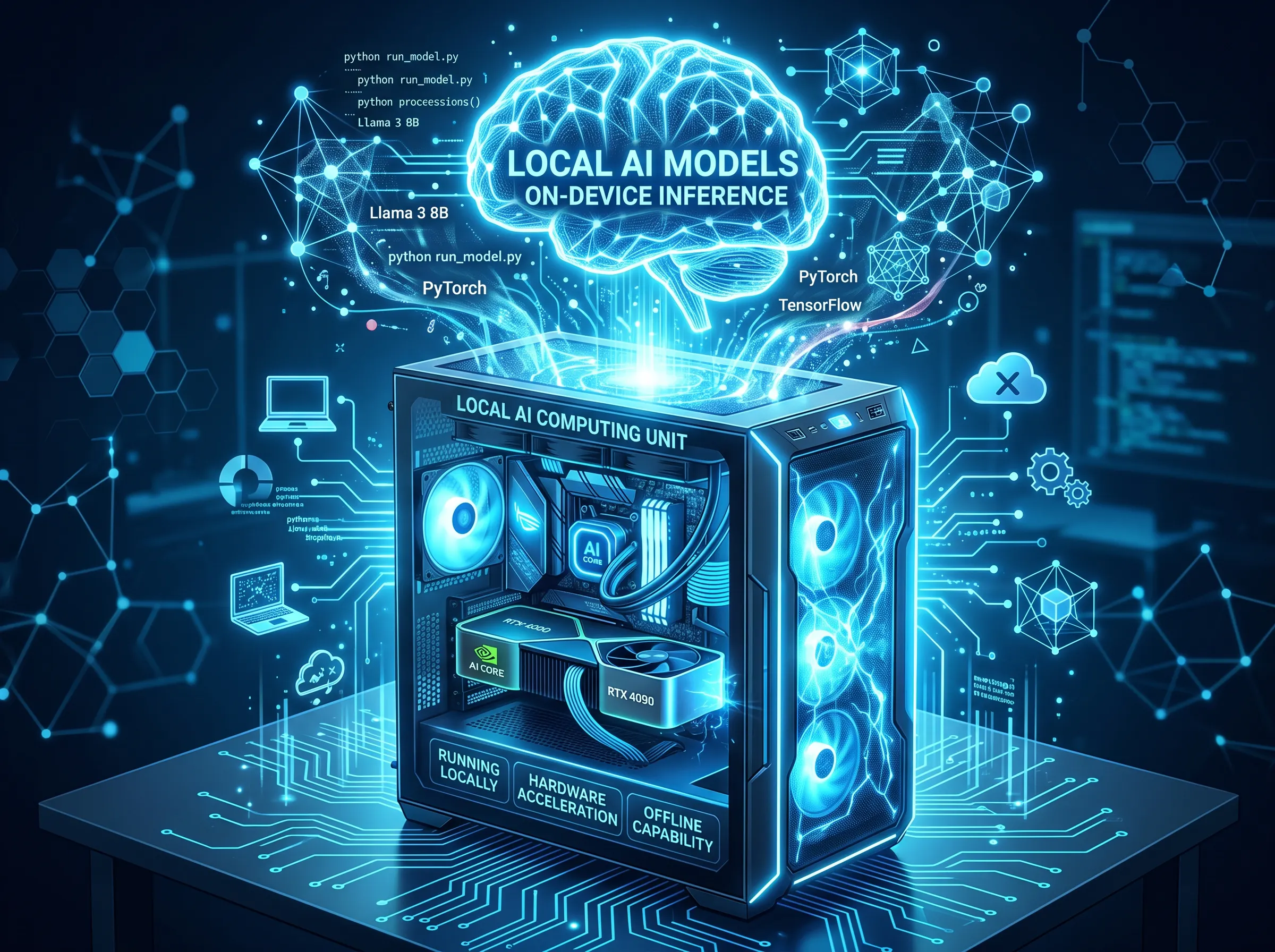
How to Run AI Models Locally: Complete Setup Guide
Learn how to run AI models locally on your own hardware, skip cloud subscriptions, and build a full local AI coding setup with LM Studio, Ollama, and VS Code.
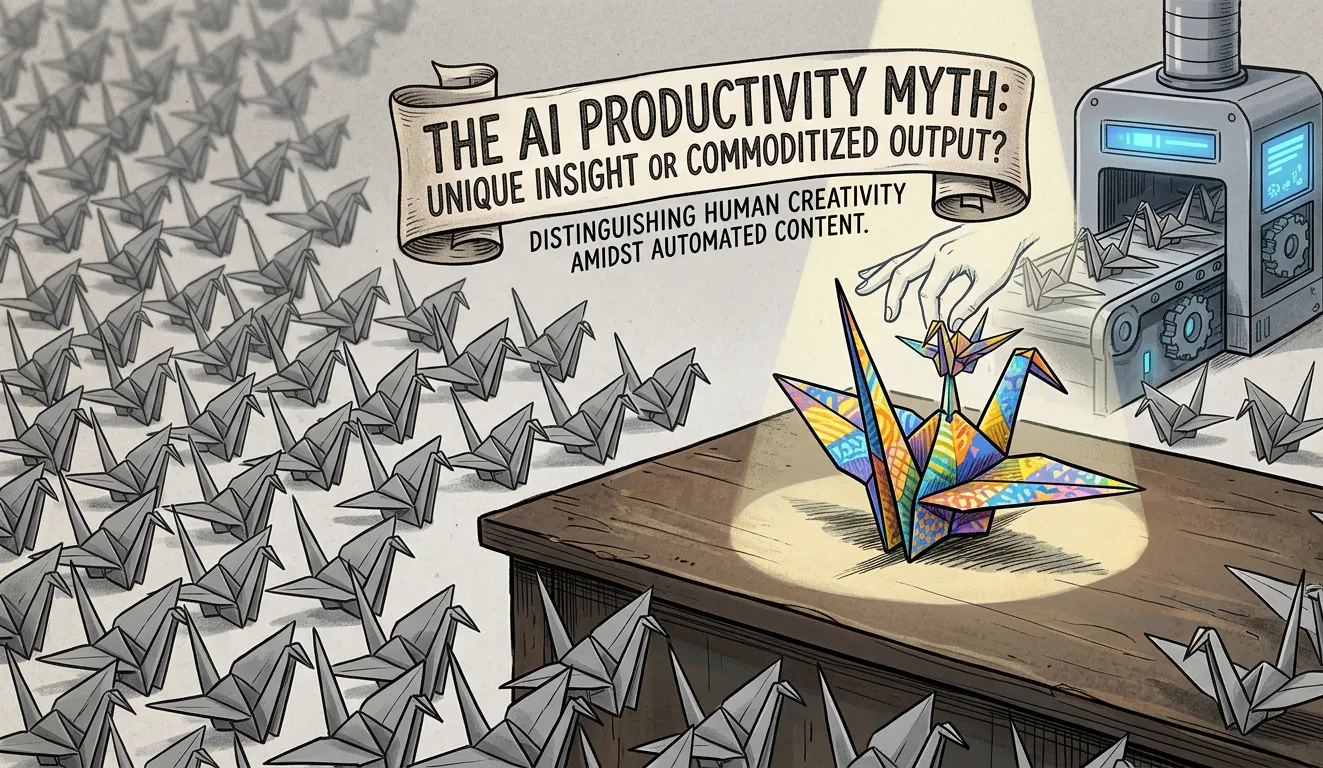
The AI Productivity Myth: Why Most People Get It Wrong
AI productivity tools promise efficiency, but relying on the same workflows as everyone else leads to generic output. Here's how to use AI to amplify what makes you rare.

Prompt Driven Development: What Is SPDD?
Learn about prompt driven development and structured prompt-driven development (SPDD), how it transforms software engineering, and why it matters for AI.

GitHub Copilot Pricing Changes: What You Need to Know
GitHub Copilot pricing changes are here, and they're not pretty. Learn how the shift to usage-based billing affects your plan, credits, and overall value.
Claude Design: What It Is and What You Can Build
Claude Design by Anthropic lets you create polished visuals, slides, and prototypes through conversation. Here's how it works and what it's actually good for.
The Claude Code Source Code Leak: What We Learned From Anthropic’s Security Fiasco
The Claude Code source code leak exposed Anthropic’s AI secrets, hidden features, and development missteps. Here’s what the leak reveals about Claude Code and AI security.